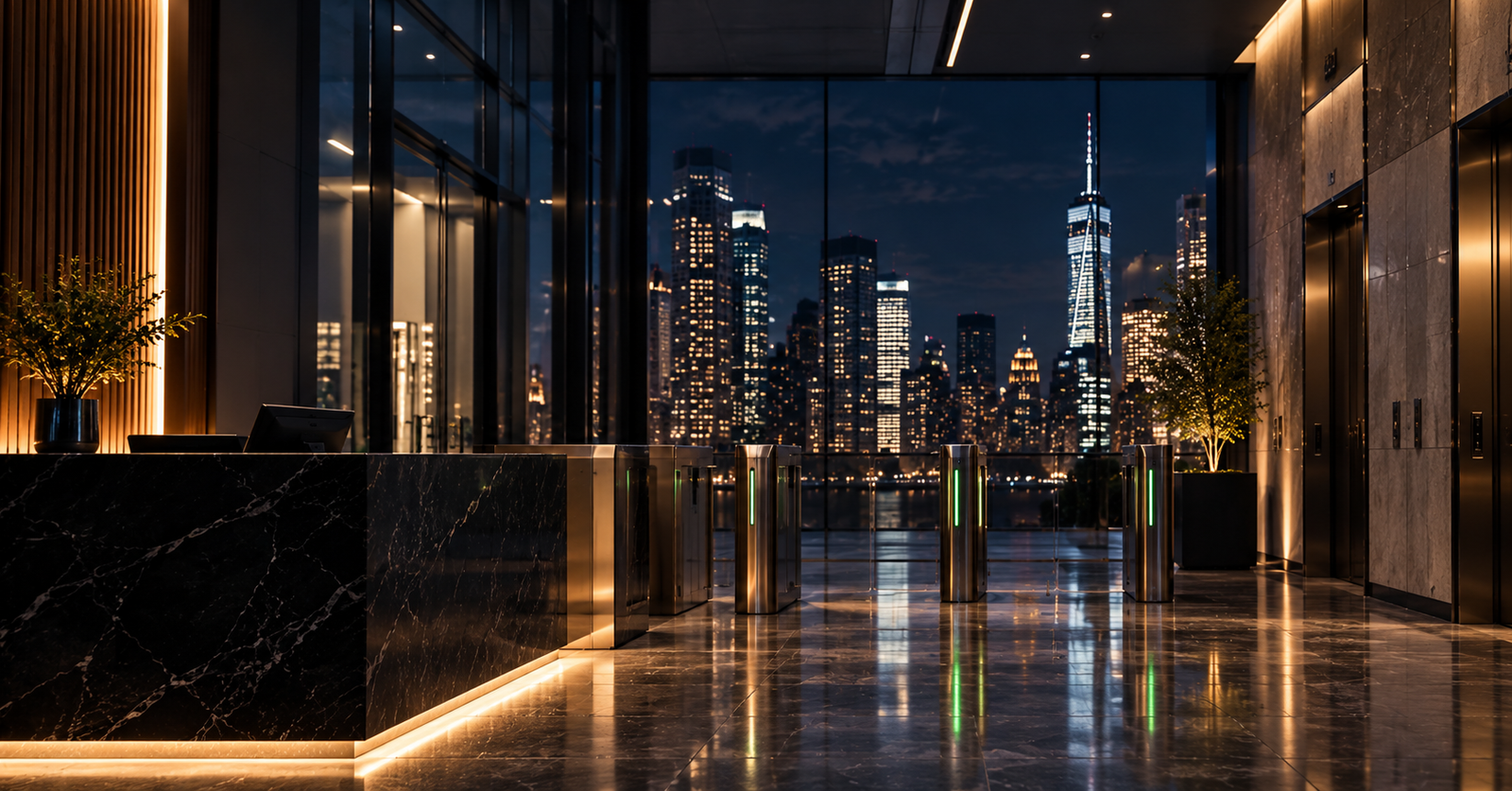
An employee returns for a laptop after the office closes. A cleaning crew is still working, and a contractor is due later. The evening team needs to know who may enter and whom to call if plans change.
To plan after-hours office security in NYC, agree on access hours, approval rules, contractor visits, closing tasks, and contacts for help. Put those decisions in instructions that the building team and each tenant can follow.
Start with a typical evening at your property. Then work through the exceptions that would otherwise leave someone at the desk guessing.
Define what changes after regular hours
“After hours” should mean something clear for your building. An office may close before the shared lobby does. Cleaning, late meetings, and weekend work may each need a different arrangement.
List the hours when access or staffing changes. Include evenings, weekends, holidays, and scheduled work. Then check that tenants know which rules apply to them.
In a multi-tenant Manhattan building, a tenant's approval may be only one part of the process. Agree with building management on who approves access to common areas and who approves entry to a suite. The desk team needs instructions that work together.
Make access approval easy to check
Set a process for staff to confirm permission before allowing entry. A familiar face or a company name should lead to the required check. Staff also need a clear next step when a name or booking is missing.
Use a short table to work through common requests:
| Arrival | What the evening team should be able to confirm |
|---|---|
| Employee working late | Current access permission, permitted area, and contact for exceptions |
| Visitor attending a meeting | Host approval, expected visit, and who will receive them |
| Cleaner or contractor | Approved company or crew, work window, and assigned work area |
| Unscheduled request | Who may approve an exception and how that approval is recorded |
Keep the approved information current and available to the staff who need it. Tenants should know how to report changes. If an employee leaves a company or a job is canceled, the relevant team needs that update.
When permission cannot be confirmed, follow the building's exception process. Explain the next step calmly while contacting the authorized person.
Plan contractor visits before they arrive
An evening repair may involve the tenant, building staff, and an outside crew. Name one person who coordinates the request so the desk receives a clear instruction.
Before work begins, confirm the company, expected crew, time window, and approved work area. Management should also check any documents or work approvals the building requires.
Discuss whether the assignment needs an escort or support away from the lobby. If so, decide who covers the remaining duties. Do not leave that choice to the person already handling arrivals.
Finally, define how the crew reports that work is complete. Someone should confirm any follow-up before the task is treated as closed. A departure entry alone may not show whether an access issue still needs attention.
Agree on closing checks and safe exits
Separate the tenant's closing tasks from the building team's duties. Decide who checks the office, who manages common areas, and who receives a report if something needs repair.
A useful closing brief covers the checks assigned to each role. It should also explain what to do when a check cannot be completed. Record the concern and contact the person responsible rather than assuming someone else will notice it.
Keep exit routes clear when crews move equipment or finish work. OSHA's exit-route guidance states that these routes must remain unobstructed. Access controls and closing tasks should preserve the building's safe exit arrangements.
Use the property's approved procedures for doors and emergency systems. Do not make a new locking arrangement simply because the daytime team has left.
Give the evening team a clear route for help
The contact list should identify who can make decisions during each covered period. A daytime office number may not reach someone who can approve a late change.
Name a primary contact and a backup. Include the right route for tenant access questions, building issues, and concerns about the security assignment. Check how staff should proceed if neither contact answers.
Keep routine exceptions separate from emergencies. A visitor missing from a list needs the agreed approval process. An urgent threat to life or safety needs the property's emergency procedure and appropriate emergency help.
Review these steps with your provider before service starts. The team should know both whom to contact and the limits of its own role.
Review open items before the next shift
Leave the incoming team a record of unresolved access requests, work still in progress, and concerns that need management attention. Each item should name the next action and who owns it.
Use the approved record and share only the information needed for the task. Keep personal details and sensitive building instructions out of broad message groups.
After the first shifts, compare the plan with what actually happened. Ask whether approvals arrived on time, contacts answered, and duties stayed covered. Those checks help you refine regular coverage with your provider.
Your after-hours office security checklist
Before you finalize the arrangement, confirm that your team can answer these questions:
- When do the after-hours rules begin and end?
- Who approves employee, visitor, and contractor access?
- How do tenant instructions fit the building's rules?
- Who covers duties during breaks or tasks away from the desk?
- What closing checks are assigned, and how are concerns reported?
- Who answers routine questions, and what is the backup route?
- How do open items reach the next shift and management?
Any unclear answer belongs in the planning discussion before you rely on the arrangement.
Questions office managers often ask
Is an access card enough to plan after-hours coverage?
A card addresses one part of entry. Your plan still needs to cover visitor approval, contractor work, exceptions, and staff support. Review the people and tasks around the access system as well as the system itself.
Should the tenant or building manager arrange security?
Start by agreeing on the area and duties involved. A tenant's suite and the building's shared lobby may have different decision-makers. Coordinate the two scopes so staff receive consistent instructions and each manager knows their responsibilities.
Discuss your building's evening coverage
If you are reviewing regular coverage, explore A1 Security Professionals' corporate security services.
To talk through your needs, call A1 at (917) 828-3434. Share the building's location, the hours you need support, and the access or closing tasks involved. Keep detailed site instructions for a private discussion with the appropriate contact.